Showing posts with label Nature. Show all posts

September 5, 2013

Ostrovy / Islands

Ostrov se dánsky řekne "ø". A když chcete vidět zajímavou přírodu a kulturu jeďte na některý ze stovek menších ostrovů. Jsou svérázné a každý je zajímavý něčím jiným. Já byl na pěti z nich.

The Danish world for an island is "ø". And when you want to see interesting nature or culture just go to one of hundreds small Danish islands. They are peculiar and every island have something else interesting. I was on five of them.


Læsø - Domy se střechou z mořské řasy, střecha váží 40 tun.
Houses with the roof made of the sea grass, weight of the roof is 40 tones.
  
Langeland - Galerie v bývalých trafačkách dlouhá 50 km.
Gallery in former transformers is 50 km long.
Fanø - Tady všechno oplétají vlnou.
Here is everything covered by wool.
Æbelø - Sem s brodíte 1,5 km mořem.
To this island you will wade 1,5 km through the shallow sea.
Tåsinge - Tady proběhlo drama jak z Romea a Julie, jen o 300 let později. 
Here happened drama like from Romeo and Juliet, but 300 years later. 
  

July 6, 2013

Dlouhé dny /Long days


Slunce zapadá kolem desáté hodiny večer, ale ještě v jedenáct je venku světlo a o půlnoci na západě náznak blankytu. Bude to asi tím, že jsme víc na severu, slunce není přes den tak vysoko jako v Čechách, ale zároveň v noci není tolik ukryté pod obzorem. Pro srovnání v Čechách je v 10 večer už skoro úplně tma. 

Sunset in Denmark is around 10 pm. At 11 pm is still light outside and in the midnight there is a sign of sky-blue in west. The reason should be that in Denmark we are more on north and the sun is not so high over the day and as well as it is not so deep under the horizon in the night. For the comparison, in Czech there is at 10 pm almost completely dark.   

No,no, it is not sunset, but typical Danish coastline with the wind turbine.


May 8, 2013

#30 Na hnízdě / On the nest

Sýkorky už sedí na hnízdech! To znamená, že za dva týdny budeme mít první ptáčata a za dalších 18 dní mladé vyletí z hnízda. Zatímco sýkorka na fotce už sedí, některá hnízda se začínají stavět. Vypadá to, že skoro ve všech budkách budeme mít koňadry a jen ve dvou modřinky. 

Tits are siting on the nests! It means, that we will have first young after two weeks and they will fly out of the nest after next 18 days. While the tit on the picture is sitting, some of the nest have been just started to build. It looks, that in most of the nests we will have big tits and only in two nest boxes blue tits.

Get out of my nest!

May 6, 2013

#28 Racek uřvaný / Screaming gull

Racek mořský, nenechte se zmást jménem, dal by se nazvat i racek uřvaný nebo racek vyžírač odpadků před hypermarketem. Nejhlasitější pták, kterého jsem potkal, kromě papouška kakadu, vyznačuje se táhlým krákáním. V Dánsku naštěstí nejsou příliš agresivní, jinde jsem se setkal s racky, co se snažili sežrat svačinu z ruky.

Seagull, don´t be fooled by his name, the name should be screaming gull or gull the eater of food scraps ahead of the hypermarket. The loudest bird which I met, apart from cockatoo. It is characterized by a long caw. Fortunately in Denmark they are not really aggressive, but in another country i met seagulls who tried to eat a snack from your hand...

Sea gull

May 4, 2013

#26 První vejce / First eggs

Naše sýkorky mají první vejce. Trochu jsme prošvihli začátek snůšky v jedné z budek, ale teď už budeme pozornější. Sýkorky totiž vejce zahrabaly do vrstvy peří a mechu. Při včerejší obhlídce jsme tak naši celkem 26 vajec. S našimi 18 obydlenými budkami bychom mohli mít dohromady kolem 150 mladých sýkorek.

Our tits have first eggs. We missed the beginning of laying eggs in one nest box, but now we are be more attentive. Tits had eggs deep in the feathers and the moos. In our yesterdays visit we found 26 eggs in total. We should have approximately 150 young birds in our 18 inhabited nest boxes! 

How many eggs is in the box? :o)

April 24, 2013

#16 Ptačí budky po třech týdnech / Nest boxes 3 week progress

Po třech týdnech sledování máme z 19 budek pro sýkorky rozestavěno 14 hnízd. Z toho 3 jsou hotová a čekáme na první vejce. Jen do jedné budky se žádný pták nepodíval. Některá hnízda sýkorky postavily během jednoho týdne a některá se staví pomalu, že by rozdíl mezi koňadrami a modřinkami?

After three weeks of monitoring nest boxes we have 14 from 19 nests in progress. Three are already built and we are waiting for the first eggs!. There is only one empty nest box, which haven´t been visited by a bird. Some of nests were built in one week and some of them are built slowly. Should it be the difference between big tits and blue tits? 

Progress of our nests after tree observations. Small dots is poo from birds, who have slept in boxes.  Black filled boxes are in progress from 1/4 to 4/4. And NL means, that nest is lined by hair and prepared for eggs.

April 22, 2013

#14. Vítr / Wind

Silný vítr se žene od moře nad plochými a nízkými dánskými ostrovy, roztáčí vrtule větrných elektráren rozestavěných v malých skupinkách po krajině, a v ohromných větrných farmách na moři. V Dánsku je síla větru stejně důležitá, jako teplota vzduchu. Proto v předpovědi počasí je, hned pod teplotou, graf rychlosti větru.

Strong wind blows from the sea over the flat Danish islands. It spins propellers of wind turbines which are scattered in the small groups over the landscape and in the big wind farms at sea. In Denmark has the strength of the wind the same importance as air temperature. Therefore is the graph of strength of the wind just under the temperature in the weather forecast.

Strength of the wind in the bottom graph of the weather forecast.

April 21, 2013

#13. Usedlosti / Farms

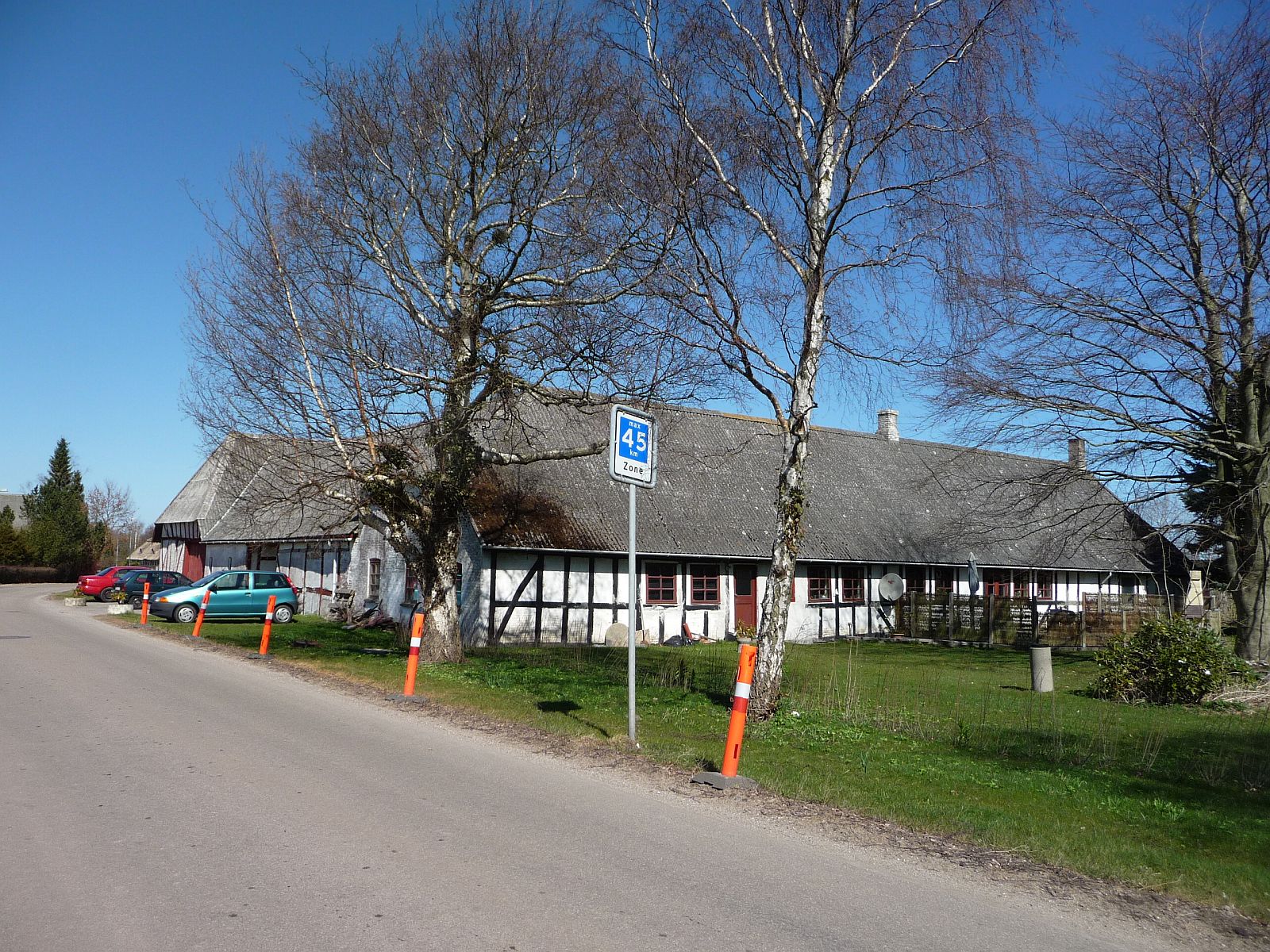
Spíše než velkými městy je Dánsko pokryto zemědělskými usedlostmi. Takovou usedlost tvoří dvůr do čtverce obklopený obytnými a hospodářskými budovami a poli. Po 500 metrech je další usedlost, za dalších 500 m další. Tady to opravdu není na chození pěšky, do obchodu se dostanete buď na kole nebo nejčastěji autem.

Denmark is rather then by big cities covered by farms. Such a farm is formed by a rectangular yard surrounded by residential buildings, outbuildings and farm lands. After 500 meters is another farm and after next 500 m is next farm... this is not a good place for going on foot. To the supermarket you will get by a bike or mostly by a car.

Typical Danish farm

April 20, 2013

#12. Podmáčený les / Waterlogged forest

V okolí Odense jsou všechny lesy podmáčené. Nejspíš za to může špatně propustná zemina a také zemědělství. Dánsko se od středověku živilo hlavně zemědělskou produkcí, těžký průmysl tu nikdy nebyl a tak se všechna suchá půda proměnila na pole a lesy zůstaly jen v mokřadech, kde se nic pěstovat nedalo.

All forests around the Odense are waterlogged. The main reason is probably poorly permeable soil and agriculture. From middle ages is the main Danish source of livelihood agriculture. There has never been heavy industry in Denmark and all dry land has been changed to the fields. Forests remained only in wetlands, where was not possible to grow anything.


Watterlogged forest in spring

April 14, 2013

#06. Diagonal alley / Příčná ulice

Rád se jdu přes den na chvíli projít a všechny ulice kolem našeho domu dobře znám, jsou dlouhé, podélné. Občas občas ulice protne příčná spojka pro pěší. Tak jsem zkusil jít jen po spojkách a najednou, uprostřed mezi zahradami ukrytý parčík. Kdo nezkusil příčnou ulici, nikdy se o něm nedozví.

I like to stroll through the streets around our house. Now I know all streets in the neighborhood very well. They are long and longitudinal. Sometimes there is a crossection with a diagonal shortcut for the pedesrians. I tried to go only by these shortcuts, when suddenly, between gardens of family houses appeared small park. Who haven´t tried the diagonal alley, he will never find it. 

What is in the end of the Diagon Alley?

April 11, 2013

#03. Nest box project – first observation/ Monitorování sýkorek – první kontrola

Tento týden jsme byli poprvé zkontrolovat 19 budek, které máme na starosti v rámci Nest box projektu. Na 13 z nich už sýkorky pracují! Budky budeme obcházet vždy jednou týdně a zaznamenávat postup stavby hnízd. Na fotce je nejpokročilejší hnízdo, které je z 1/4 postaveno. Sýkorky kladou vejce začátkem května.

This week we controlled at the first time our 19 nest boxes, which we care about in Nest box project. Blue tits have already started working on their nests in 13 boxes! We will control boxes once a week and record the process of construction of nests. On the photo, there is our most advanced nest, which is being already built from 1/4. Blue tits lays eggs at the beginning of May.


Our most advanced nest / Naše nejpokročilejší hnízdo

March 15, 2013

Nest boxes in the woods

This weekend I helped with hanging of nest boxes in the woods around the University. We placed first 30 of 100 boxes. 
It is the part of the scientific project. We will monitor the breeding of the Blue Tit from building of the nest through the egg-laying to the flying out of the nest. Blue Tit lays eggs in the middle of April. So probably I will send here some photos of eggs in a nest box :o). 
Hanging of the nestbox.